リーさん、
おげんきですか。ニューヨークはあたたかくなりました。あなたははる休みにニューヨークへ来ることができますか?ぜひニューヨークに来てください!ニューヨークはとてもおもしろくて、にぎやかです。そして、おいしいレストランがたくさんあります。しかし高いまちです。ホテルも高いですから、ホテルをよやくしなくてもいいです。わたしのへやをつかってもいいです。
ニューヨークでびじゅつかんへ行ったり、おいしいりょうりを食べ足り、ミュージカルを見たりしたことができます。リーさんは"Neue Galerie"をしっていますか。"Neue Galerie"でオーストリアとドイツとドイツアーティストのえがあります。ゆうめいなアーティスト,クリムトのえもあります。"Neue Galerie"はUpper East Sideにあります。にあります。バスで行きます。"Neue Galerie"へ行ってから、St.Mark'sのやきとりを食べに行きます。それからミュージカルを見ましょう!ミュージカルが好きですか?わたしのしゅみはミュージカルのおんがくを聞くとです。"Wicked"をみ見たとがありますか。いろいろなミュージカルで"Wicked"がいちばんいいです。わたしはもう見ました。1年まえに、友達と見ました。でもでもまたでもまた見ることができます。ですから来週までに2まいきっぷを買いましょうか。電話をかけてください!じゃ、また。
ジーン
Monday, February 21, 2011

Friday, February 18, 2011
About Communication
From the pod-casting project, I expect to learn how to make and edit a short clip, effectively work with group members, and learn new Japanese phrases useful in our presentation. Also, because our pod-casting project involves Japanese cooking, I expect to learn how to cook some Japanese dishes. Communication is the way of conveying one's ideas/opinions and listening to others' ideas/opinions. To communicate effectively, one has to clearly convey the ideas. Therefore, the speaker should speak loudly and think about what the listener can and cannot understand. Also, one should both speak and listen while communicating because doing only one of these would not lead to the effective exchange of ideas.
Thursday, February 10, 2011
韓国(かんこく)のでんとうぶんが(Traditional Culture)
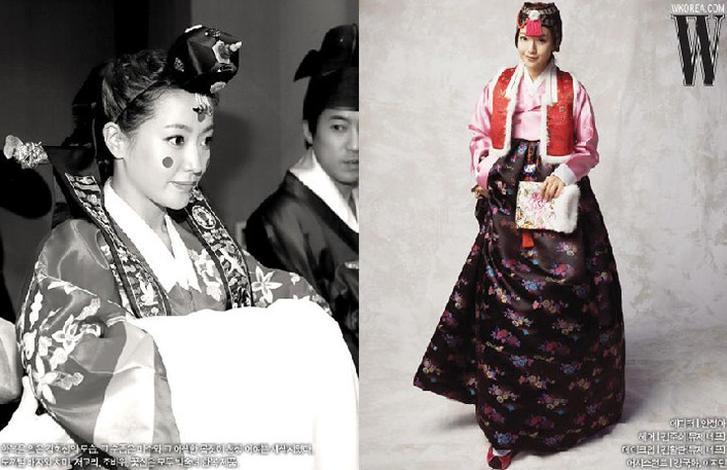
Hanbokは韓国のでんとう(traditional) ふくです。とてもきれいですが、き(きます:wear)かたはやさしくないです。It consists of the Jeogori (upper garment) and the lower garment (skirts for women and pants for men). しょうがつ(1月1日)にHanbokをきてもいいです。It is also worn during special occasions such as funerals and weddings. Hanbokをみましょう!


 In the last picture, the left is a Hanbok worn during Pyebaek(traditional ceremony to pay respect to the groom's family by the newly weds right after their wedding).
Gayageumは韓国のでんとうかっき(instrument)です。It is very similar to こと。わたしはGayageumをひくことができません。Below is a remix of "Variations on the Canon by Pachelbel" with Gayageum, beat box, and DJ-ing. とてもおもしろいですよ!
Pungmul is a Korean folk music traiditon that includes percussion, dancing and singing. コロンビア大学でPungmulクラブがあります。なまえはHoheupです。このビデオはながいですね。
みなさんは韓国のでんとうぶんがで何がいちばん好きですか?

Gayageumは韓国のでんとうかっき(instrument)です。It is very similar to こと。わたしはGayageumをひくことができません。Below is a remix of "Variations on the Canon by Pachelbel" with Gayageum, beat box, and DJ-ing. とてもおもしろいですよ!
Pungmul is a Korean folk music traiditon that includes percussion, dancing and singing. コロンビア大学でPungmulクラブがあります。なまえはHoheupです。このビデオはながいですね。
みなさんは韓国のでんとうぶんがで何がいちばん好きですか?
Wednesday, February 2, 2011
わたしの好きな物
"MATE"はかんこくのインディーバンドです。このうたは"난 너를 사랑해(あいしてる)"です。ゆうめいじゃありませんが、いいうたです。そしてかし(lyrics)はとてもかんたんです。"난 너를 사랑해(あいしてる)"がたくさんあります。
わたしもジャズピアノが好きです。このうたは"Enrico PieranunziのLes Amants"です。ピアノとサクソフォンのサウンドはきれいで、たのしいです。
わたしの大好きなアートは"Impressionist style"です。バレエガ好きですから、Degasのえはすてきですね。RenoirとMonetも好きです。MonetのWater Liliesはモマにあります。モマとメトへえをみにいきたいです。


わたしもジャズピアノが好きです。このうたは"Enrico PieranunziのLes Amants"です。ピアノとサクソフォンのサウンドはきれいで、たのしいです。
わたしの大好きなアートは"Impressionist style"です。バレエガ好きですから、Degasのえはすてきですね。RenoirとMonetも好きです。MonetのWater Liliesはモマにあります。モマとメトへえをみにいきたいです。


Monday, January 24, 2011
おおみそか(12月31日)
 わたしはふゆ休みのおおみそかにかんこくにいました。あねとともだちとRainのコンサートへいきました。あねはRainをしっていますから、コンサートのback stageへRainにあいにいきました。いっしょにしゃしんをとりました。とてもおもしろかったです。コンサートはたのしかったです。12月26日に2AMのコンサートへいきました。2AMはRainよりすきですから、2AMのコンサートはもうすこしたのしかったです。らいねんのおおみそかにかれとコンサートへいきたいです。
Monday, December 6, 2010
Composition 3
にじゅうねんごのわたしわよんじゅういっさいです。わたしのかぞくはぜんぶでよにんです:わたし、おっと、ふたりのこども。むすめがふたりいます。わたしのしゅじんはかいしゃいんです。わたしたちのうちはかんこくのソウルにあります。わたしのりょうりがへたですが、わたしはイタリアのレストランのオーナーです。イタリアのりょうりがすきですから。わたしはりょこうがだいすきですから、かぞくといろいろなくにへいきます。そしてしゅじんとともだちとゴルフをします。しゅうまつにかぞくとえいがやミュージカルやオペラやコンサートをみます。
Wednesday, December 1, 2010
Katakana Analysis Revised
The first Katakana word I chose to bring in was メモパッド(memopad),which was on a Sanrio character memopad. The second Katakana word was ソフト(soft)from the package of a cookie. Both of these Katakana words were mainly used as loanwords and also as emphasis. By expressing these words in Katakana rather than in their Japanese equivalents in Hiragana or Kanji, they were emphasized among the other Hiragana or Kanji characters. Moreover, similar to Korean culture in which using loanwords is often considered modern, the use of Katakana for loanwords gave it a more global sense to it. In fact, conveying a more modern and global feel may have been the exact purpose for such usage because they were afterall customer goods targeted for the young people. From this, one can see that Katakana can have great usage as a marketing vector. It not only captures the trendy effect of using loanwords, but it also demonstrates the growing western culture element in Japan. In fact, Katakana for loanword indeed shows that Japan is open towards other cultures.
Although I chose loanword and emphasis Katakana words, Katakana is also used as onomatopoeia. For example, ドカン is the sound of an explosion in a manga. Yet, onomatopoeia can be viewed as a specific type of emphasis of the on-going situation. It is a more poetic way of emphasizing and describing what is going on. Hence, Katakana's role as emphasis may have evolved to using it for onomatopoeia as well.
As Katakana usage reasons differ from situation to situation, textbooks have different explanations for Katakana as well. This is not surprising because there are no set rules in using Katakana. Katakana usage is very complex because it is mostly by choice of the writer. Moreover, setting rules for the vast possibility of Katakana usage (infinite number of loan words and onomatopoeia and emphasis by choice of user) is more hard to accept. Also, Katakana usage will continuously change, develop, and evolve as time passes and hence, textbooks will not be able to explain these numerous changes every time.
Although I chose loanword and emphasis Katakana words, Katakana is also used as onomatopoeia. For example, ドカン is the sound of an explosion in a manga. Yet, onomatopoeia can be viewed as a specific type of emphasis of the on-going situation. It is a more poetic way of emphasizing and describing what is going on. Hence, Katakana's role as emphasis may have evolved to using it for onomatopoeia as well.
As Katakana usage reasons differ from situation to situation, textbooks have different explanations for Katakana as well. This is not surprising because there are no set rules in using Katakana. Katakana usage is very complex because it is mostly by choice of the writer. Moreover, setting rules for the vast possibility of Katakana usage (infinite number of loan words and onomatopoeia and emphasis by choice of user) is more hard to accept. Also, Katakana usage will continuously change, develop, and evolve as time passes and hence, textbooks will not be able to explain these numerous changes every time.
Subscribe to:
Posts (Atom)